How to Choose the Right Truck Sat Nav
For professional truck drivers, choosing the right navigation system is about more than the fastest route.
HGVs face limits that cars do not.
These include low bridges, weight limits, narrow roads, and different speed limits.
A dedicated truck sat nav can make route planning easier. It uses details about your vehicle and helps you pick better roads. Whether you're an experienced HGV driver, regularly travel long distances, or are looking for a more reliable navigation solution, understanding the most important features can help you make the right choice.
Here’s what to consider when choosing a truck sat nav.
Why Choose a Dedicated HGV Sat Nav?
Standard car navigation systems are designed primarily for passenger vehicles. While they can provide directions and traffic information, they may not account for the restrictions that apply to a larger vehicle.
A dedicated HGV sat nav allows drivers to enter relevant vehicle details, such as height, width, length and weight. Compatible devices can then use this information to provide specific routing based on known road restrictions.
This can help drivers avoid low bridges and unsuitable roads while providing navigation that better reflects the needs of commercial vehicles.
For professional drivers who spend hours behind the wheel, these features can make a truck-specific sat nav a valuable everyday tool.
Looking for navigation designed for professional driving? Explore Snooper's truck sat nav range to find a suitable solution for your vehicle.
1. Vehicle-Specific Route Planning
One of the most important features to consider is vehicle-specific route planning.
Routes suitable for cars are not always appropriate for HGVs. A good truck sat nav can calculate routes using the vehicle information entered by the driver alongside available mapping data.
This route based approach can help identify more appropriate roads and reduce the chance of being directed towards known restrictions.
When comparing devices, look for the ability to enter your vehicle's dimensions and weight. This is particularly important for drivers who regularly change vehicles or operate different types of trucks.
Specific routing can be especially useful when travelling to unfamiliar destinations
2. Help to Avoid Low Bridges
Low bridges are a major concern for truck drivers, making bridge information an important feature of HGV navigation.
By entering the correct vehicle height, compatible navigation devices can use available road and mapping information to help avoid low bridges when calculating a route.
However, a sat nav should always support rather than replace driver awareness. Road signs and current restrictions must take priority over instructions from any navigation device.
Choosing a system specifically designed for HGVs provides an additional source of information when planning and completing journeys.
3. Clear Lane Guidance
Navigating busy motorways and complicated junctions can be challenging in a larger vehicle, particularly when travelling somewhere new.
Clear lane guidance can help drivers identify the appropriate lane ahead of junctions and exits, providing more time to prepare for the next manoeuvre.
This feature can be particularly useful during long-distance journeys, where a driver may encounter multiple unfamiliar motorway interchanges in one day.
A clear screen is also important. When comparing navigation systems, consider the display size and how easily important instructions can be understood at a glance.
4. Live Traffic Information
Unexpected congestion can have a major impact on professional driving schedules.
Access to live traffic information can help drivers stay aware of congestion, incidents and other delays. Where supported, live traffic updates provide useful information as conditions change.
Having access to real time traffic data may help drivers make better-informed decisions during their journey, particularly when working to delivery times or completing multiple stops.
When choosing a device, check how traffic information is supplied and whether a phone connection, data service or subscription is required.
Want navigation that helps you stay informed on the road? Compare Snooper's truck sat nav options and their available traffic features.
5. Speed Limits and Speed Cameras
Professional drivers need to remain aware of applicable speed limits, particularly because restrictions can differ according to vehicle type and road.
A suitable truck navigation system may provide speed limit information to support driver awareness.
Some devices can also provide information relating to speed cameras, where this functionality is available and legally permitted.
These features should always be considered driving aids. Current road signs, local laws and the driver's own observations take priority over information displayed by a sat nav.
6. Useful Points of Interest
Navigation is not only about reaching your final destination. Professional drivers may also need to find fuel stations, parking locations and other facilities during a journey.
Relevant points of interest can help make these locations easier to find.
This can be particularly helpful for an HGV driver travelling through an unfamiliar area or completing a long distance route.
When comparing devices, consider whether the available points of interest are useful for professional drivers and the types of journeys you regularly make.
7. Regular Map Updates
Road networks are constantly changing. New roads open, layouts change and restrictions may be introduced or amended.
For this reason, map updates should be an important consideration when buying a sat nav.
Check how frequently updates are available, how they are installed and whether there are additional costs involved.
Keeping maps updated gives your device access to newer road information. However, drivers should always follow current road signs when they differ from the navigation system.
What Should You Look For?
Before choosing a truck sat nav, consider the features that will make the biggest difference to your journeys:
- Vehicle-specific route planning
- Routing designed to help avoid low bridges
- Clear lane guidance
- Live traffic updates
- Reliable live traffic information
- Information about relevant speed limits
- Speed camera information where available
- Useful points of interest
- Straightforward map updates
- A clear display suitable for a larger vehicle
- Routing suitable for long-distance journeys
Rather than choosing based on price alone, consider how often you will use the device and which features are most valuable to your work.
FAQs
What is a truck sat nav?
A truck sat nav is a navigation device designed with commercial vehicles in mind. Compatible devices can use information about a truck's dimensions and weight to provide more appropriate routing.
Can a truck sat nav help avoid low bridges?
Yes. Using available mapping information and correctly entered vehicle dimensions, compatible devices can calculate routes designed to help avoid low bridges and other known restrictions. Drivers must still follow road signs.
Does a truck sat nav provide real-time traffic information?
Depending on the device and service, truck sat navs may provide real-time traffic information to help drivers identify congestion and delays.
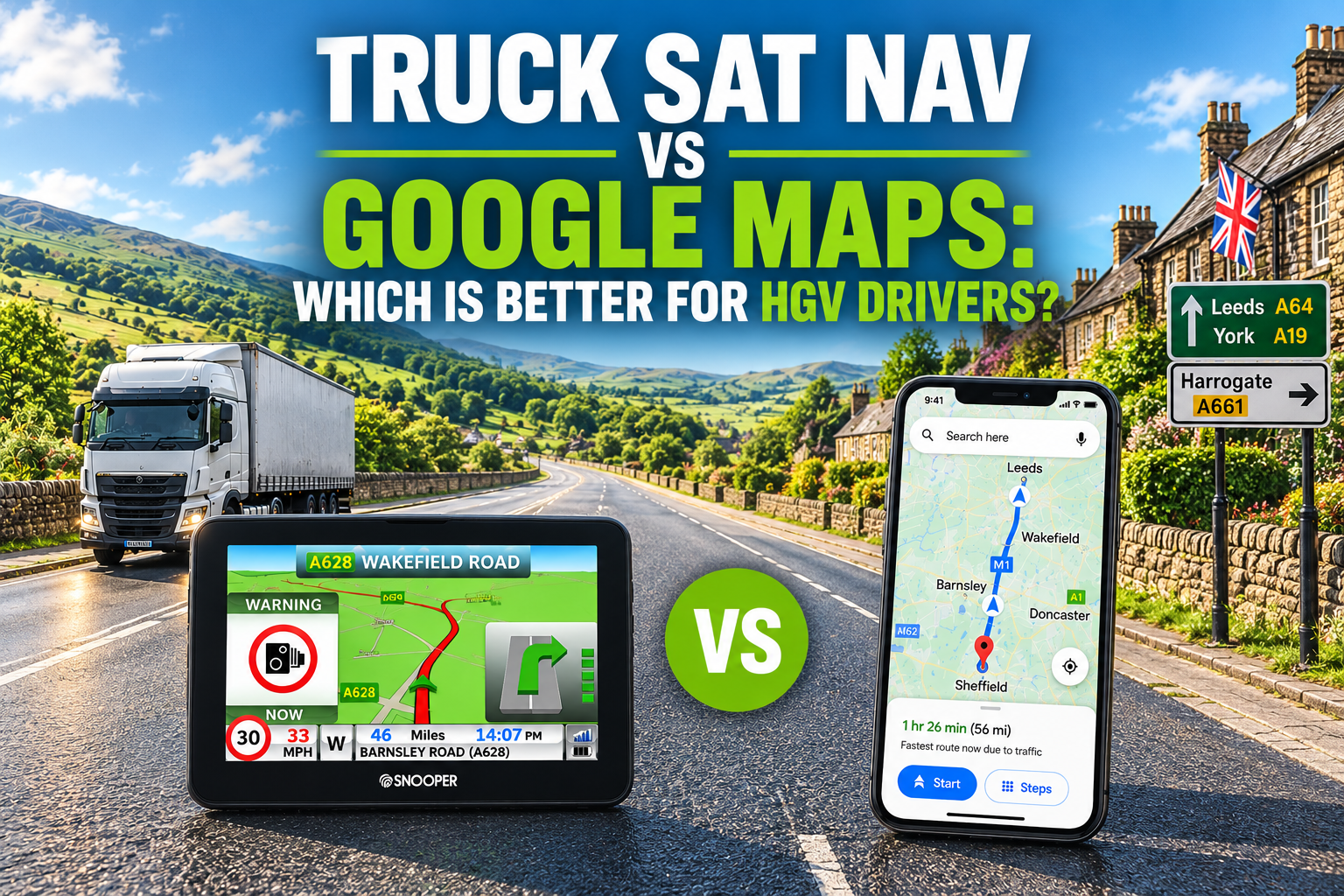
Is a truck sat nav better than a smartphone app?
A smartphone app can be useful, but a dedicated device may provide more specialised HGV features and a purpose-built display. The best option depends on your driving requirements.
Find the Right Truck Sat Nav
The right truck sat nav can give professional drivers navigation that better reflects the realities of commercial driving.
From specific routing and lane guidance to traffic information, useful points of interest and updated maps, choosing the right features can make everyday journey planning simpler.
For any HGV driver, the key is to choose a device that suits the vehicle, routes and distances you regularly cover.
Explore Snooper's truck sat nav range and find a navigation solution designed for professional drivers.